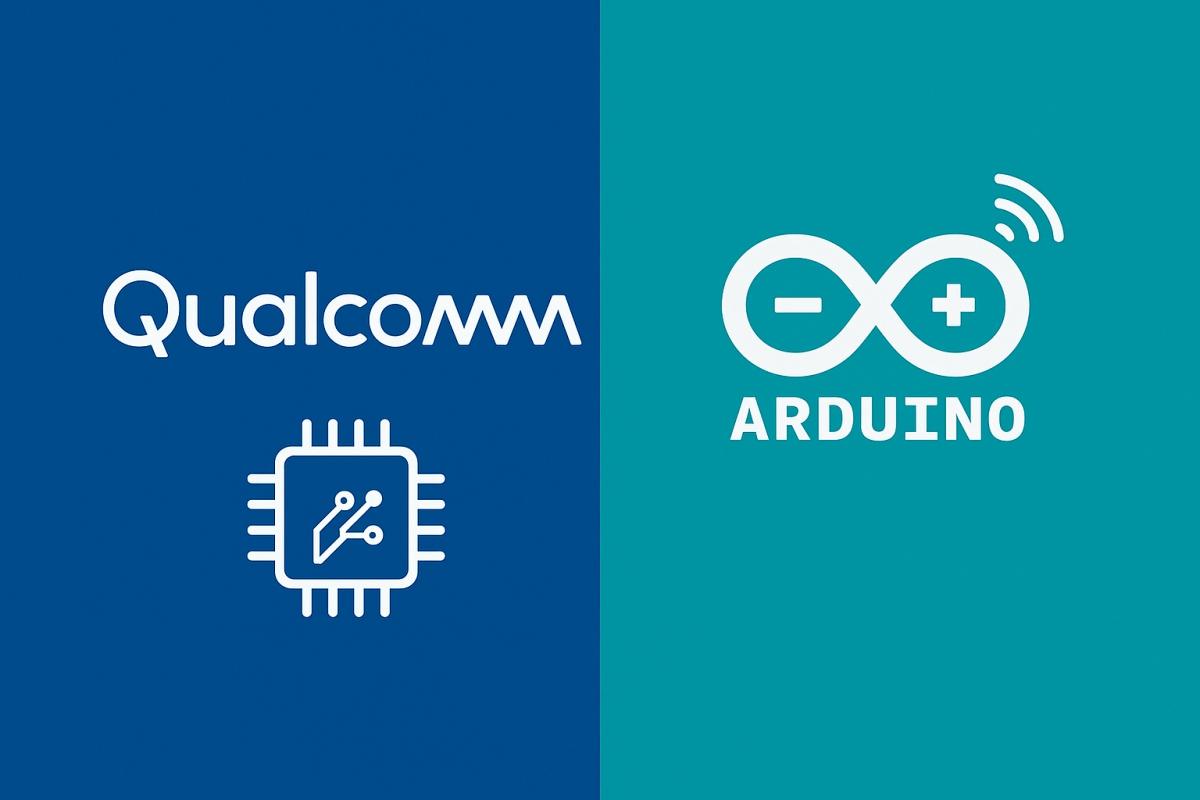
The Arduino VENTUNO Q marks a significant evolution in the Arduino brand, especially in light of its recent acquisition by Qualcomm. This single-board computer (SBC) is designed to make artificial intelligence accessible to a wider audience, aligning with Qualcomm’s mission of ‘democratizing AI.’ By incorporating cutting-edge technology like the Dragonwing IQ-8275 System on Chip (SoC) and the STM32H5F5 microcontroller (MCU), the VENTUNO Q is poised to redefine robotics projects within the Arduino ecosystem. As enthusiasts and developers dig into the specifications, including impressive ARM cores and Adreno 623 GPU support, they will undoubtedly be eager to explore the VENTUNO Q’s capabilities. With such advancements, the future of Arduino looks bright, potentially ushering in exciting innovations in AI and automation.
Introducing the latest addition to the Arduino family, we now turn our attention to the innovative VENTUNO Q, a powerful board designed to bolster automation and robotics development. This new platform, which merges artificial intelligence capabilities with robust hardware, highlights the strategic vision following Qualcomm’s acquisition of Arduino. As developers look for versatile tools to bring their projects to life, the VENTUNO Q stands out with its advanced SoC and MCU combination, showcasing the potential of a new era for Arduino creators. With the Dragonwing IQ-8275 leading the charge, this board promises to unlock new opportunities in tech-driven applications and revolutionize the future landscape of the Arduino community. Prepare for a thrilling journey into the realm of robotics and intelligent systems with this exciting board!
The Future of Arduino After Qualcomm’s Acquisition
Since Qualcomm’s acquisition of Arduino, the community has been buzzing with curiosity about the platform’s future. The initial announcement centered around the integration of artificial intelligence (AI) into Arduino’s offerings, suggesting that the brand will diverge into the advanced realms of AI technology. This shift is particularly evident with the upcoming release of new products such as the Arduino VENTUNO Q, which aims to ‘democratize AI’ for developers and makers at all levels. This vision aligns well with Qualcomm’s reputation for pushing boundaries in technological innovation.
As the market for embedded AI applications expands, Arduino’s movement towards AI can be seen as both a response to industry trends and an opportunity to attract new user segments. By harnessing Qualcomm’s cutting-edge chip technology and expertise, Arduino appears poised to revitalize its product lineup. The future for Arduino under Qualcomm’s stewardship points toward a fusion of traditional electronics with state-of-the-art AI capabilities, ensuring that makers, industrial operators, and tech enthusiasts alike have access to powerful tools.
Exploring the Features of Arduino VENTUNO Q
The Arduino VENTUNO Q is set to redefine the capabilities of single-board computing. Built around Qualcomm’s Dragonwing IQ-8275 System on Chip (SoC), this board brings forward significant advantages in processing power and graphics capabilities. The architecture, featuring eight 2.35 GHz ARM cores and an Adreno 623 GPU, allows for seamless execution of complex algorithms and the development of sophisticated robotics projects. Coupled with an STM32H5F5 microcontroller, the VENTUNO Q offers a myriad of functionalities that cater to both hobbyists and professionals in robotics and automation domains.
What makes the VENTUNO Q particularly valuable is not just its enhanced specifications but also its design ethos which promotes versatility in applications. With 16 GB of LPDDR5 RAM and ample expansion ports beyond the standard USB-C, developers can leverage the board for diverse projects, integrating sensors, AI models, and much more. As the demand for robotic control systems and IoT devices continues to rise, the Arduino VENTUNO Q places itself as an essential tool for future-facing developers seeking innovative solutions.
The Role of AI in Arduino’s Product Strategy
As the tech landscape evolves, incorporating AI into Arduino’s product strategy is both strategic and timely. The integration of AI capabilities within their offerings allows Arduino to not only stay relevant but also lead the charge in the DIY electronics community. With products like the Arduino VENTUNO Q, users can build more intelligent systems that learn and adapt, creating exciting possibilities for future projects. The synergy between artificial intelligence and embedded systems paves the way for unprecedented development in home automation, robotics, and responsive computing.
Moreover, Qualcomm’s influence is crucial in this transition towards AI. Their extensive research and development in AI algorithms and hardware optimization enable Arduino to implement features that were previously unattainable. Such advancements not only enhance existing user experiences but also elevate the expectations of the brand itself. Aspiring developers will likely find themselves inspired to create solutions leveraging these new capabilities, which in turn enriches the entire Arduino ecosystem.
Enhancing Robotics with New Arduino Technology
With its transition into the realm of AI, Arduino is also making strides in advancing robotics applications. The upcoming Arduino VENTUNO Q, equipped with powerful computing resources and enhanced graphics processing, positions itself as an ideal platform for developing intricate robotic systems. The potential to perform real-time processing and machine learning on the board opens up new avenues for robotics enthusiasts and professionals looking to innovate within their projects.
The capabilities of the VENTUNO Q align closely with current trends in robotics where intelligence, adaptability, and connectivity are essential. By allowing robotics engineers to utilize sophisticated AI models directly on their hardware, Arduino is not just keeping pace with technological advancements; it is actively shaping the future of robotic innovation. This evolution reflects a broader trend in the industry where embedded systems and intelligent algorithms converge to create smart, autonomous machines.
The Importance of the Dragonwing IQ-8275 in Arduino Developments
A hallmark of the new Arduino VENTUNO Q is its foundation on the Dragonwing IQ-8275 SoC, which is pivotal for boosting performance across various applications. This specially designed chip is at the heart of the VENTUNO Q, enhancing its capability to handle high computational loads. As the demands for faster, more efficient processing rise, this board is equipped to meet and exceed those expectations, particularly in settings where real-time data processing is critical.
The Dragonwing IQ-8275 not only elevates the processing power of the Arduino ecosystem but also introduces advanced features that allow developers to experiment with next-generation AI applications. This positions the VENTUNO Q as a key player in both educational and professional settings, promoting a deeper understanding and utilization of AI in robotics and automation. The integration of such technology marks a significant milestone in Arduino’s commitment to innovation and user empowerment.
How Arduino’s Evolution Impacts Future Innovations
Arduino’s evolution, especially following its acquisition by Qualcomm, may greatly influence the tech landscape. As the company moves into AI and advanced computing, it is likely to spark significant innovations across various tech sectors. The direction Arduino will take with new releases such as the VENTUNO Q not only indicates a shift in focus but also highlights potential collaborations and integrations with other tech enterprises looking to capitalize on Arduino’s established community and brand.
In this transformed landscape, future innovations will likely include enhanced features in community-driven projects, potentially leading to more sophisticated applications in areas like smart cities, environmental monitoring, and autonomous systems. Arduino’s commitment to democratizing technology means that these innovations will be accessible to a broader audience, fostering creativity and experimentation, and paving the way for emerging developers to push the boundaries of what is possible.
The Community’s Response to Arduino’s New Direction
As Arduino positions itself at the intersection of AI and robotics, community reaction is a vital aspect to consider. Enthusiasts and developers have historically been a significant part of Arduino’s success, and their perspectives play a critical role in shaping the future direction of the platform. While comprehensive features designed for industrial applications may attract new user bases, existing Arduino aficionados may have mixed feelings, particularly regarding the shift away from hobbyist-focused designs.
Community feedback can significantly impact the development trajectory of new products like the Arduino VENTUNO Q. If the response is overwhelmingly positive, it can lead to even more investment in AI-driven projects and create excitement within the community. Conversely, if the more industrial focus of this new technology alienates the core DIY segment, Arduino may need to strike a balance, ensuring both segments feel valued and catered to in their future product lines.
Trends Shaping the Future of Arduino
In light of these developments, several trends are shaping the future of Arduino. The rise of AI is certainly a key factor, and as small-scale computing becomes more integrated with machine learning, Arduino’s role as a facilitator of these technologies will be pivotal. Additionally, the ongoing interest in robotics is pushing Arduino to refine its offerings, ensuring they meet the demands for more complex and interactive user experiences.
Furthermore, collaboration with industry leaders such as Qualcomm can provide access to resources and technologies that will keep Arduino products at the forefront of innovation. As the landscape shifts, monitoring these emerging trends will be crucial for existing and new developers as they navigate the exciting possibilities presented by a more advanced Arduino ecosystem.
Preparing for Arduino’s Integrated AI Solutions
As we prepare for the launch of the Arduino VENTUNO Q and its AI-centric features, developers must gear up to embrace integrated solutions. This involves cultivating skills in AI, machine learning algorithms, and understanding the underlying hardware capabilities. By doing so, current and aspiring makers can effectively leverage the enhanced functionalities offered by new boards and integrate these solutions into their projects seamlessly.
Training and resources will be essential in ensuring that the community can effectively engage with these advancements. Arduino educational initiatives, workshops, and tutorials focusing on AI applications will be necessary to bridge any knowledge gaps. As innovation accelerates, fostering a skilled community will be key to ensuring the successful adoption and utilization of Arduino’s next-generation technology.
Frequently Asked Questions
What are the key features of the Arduino VENTUNO Q following the Qualcomm acquisition?
The Arduino VENTUNO Q boasts impressive features including the Dragonwing IQ-8275 SoC with eight 2.35 GHz ARM cores, an Adreno 623 GPU, and 16 GB of LPDDR5 RAM. This board is particularly designed for AI and robotics applications, aligning with Qualcomm’s vision post-acquisition.
How does the Arduino VENTUNO Q compare to the Arduino Uno Q?
While the Arduino Uno Q is aimed at a broader market, the Arduino VENTUNO Q is built with industrial and automation applications in mind. Its powerful Dragonwing IQ-8275 SoC and STM32H5F5 MCU provide greater processing capabilities, making it a noteworthy upgrade.
Will the Arduino VENTUNO Q facilitate advancements in AI and robotics?
Yes, the Arduino VENTUNO Q is marketed as ‘democratizing AI’ and is actively promoting robotics integration, which indicates a significant focus on these technologies in its development and applications.
What is the expected impact of the Qualcomm Arduino acquisition on the future of Arduino products?
The Qualcomm acquisition is expected to guide the future of Arduino towards more advanced technologies, especially in AI and robotics, as seen with the introduction of the VENTUNO Q, suggesting a shift into new market territories.
When will the Arduino VENTUNO Q be available for purchase?
Though an exact release date has not been specified, the Arduino VENTUNO Q is anticipated to be launched ‘soon,’ highlighting its readiness to enter the market alongside other Arduino offerings.
What applications is the Arduino VENTUNO Q best suited for?
The Arduino VENTUNO Q is tailored for applications in industrial automation, AI projects, and robotics, providing a versatile platform for developers looking to innovate within these fields.
What makes the Arduino VENTUNO Q a powerful solution for developers?
The board’s combination of the Dragonwing IQ-8275 SoC and STM32H5F5 MCU allows for high processing power and enhanced capabilities, making it an ideal choice for developers working on complex AI and robotics projects.
How will the Arduino VENTUNO Q influence the future of maker projects?
With its advanced features targeting AI and robotics, the Arduino VENTUNO Q may expand the scope of maker projects, encouraging hobbyists and professionals to explore innovative solutions in these rapidly evolving fields.
| Key Features | Details |
|---|---|
| Acquisition Impact | Arduino’s future direction is influenced by Qualcomm’s acquisition, focusing on AI and robotics. |
| New Board: Arduino VENTUNO Q | Promoted for democratizing AI, signifies a shift in Arduino’s focus. |
| Specifications | Powered by the Dragonwing IQ-8275 SoC and STM32H5F5 MCU, with 8 ARM cores and Adreno 623 GPU. |
| Target Market | Aimed at industrial and automation applications, contrasting the market-driven Uno Q. |
Summary
The Arduino VENTUNO Q is reshaping Arduino’s future after Qualcomm’s acquisition, emphasizing AI and robotics integration. As the demands for automation and intelligent solutions grow, the VENTUNO Q, with its advanced specifications and powerful components, positions Arduino effectively within the evolving tech landscape. Understanding its features and intended market will be crucial for enthusiasts and developers looking to leverage this exciting new board.